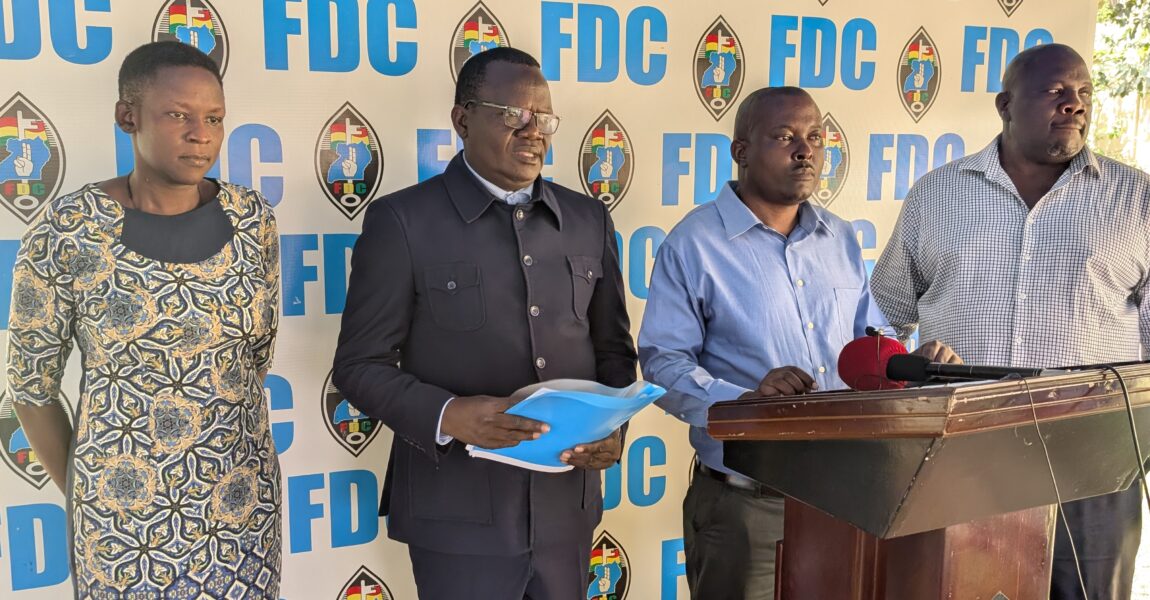
This press Conference will address 2 issues
- Transport
- The fight against corruption
- Improved oversight at the Local Government Council level and the Central Government level
- A total revolution when part (a) above fails.
THE 100-DAY TAXI CRACKDOWN ON GANYEGENYA TAXIS
The Minister of Works and Transport, Fred Byamukama, has directed police to begin a 100-day crackdown impounding taxis in the Greater Kampala Metropolitan Area found to be in dangerous mechanical condition, starting today Monday, August 24, 2026.
Whereas we agree that many taxis operating on Kampala’s roads are in poor conditions, (Ganyegenya) as the minister puts it, and removing them is a good move, this action is impulsive in nature. Implementation without finding an alternative means of transport for the DMC commuters will worsen the already bad situation. Why? Removing a number of taxis from the roads without putting an adequate alternative transport system in place will create scarcity, and this scarcity will inevitably increase transport costs for the ordinary commuter. At a time when the cost of living is already high, with rising fuel prices, taxes and other costs paid by taxi operators, the additional cost will ultimately be passed on to the common person who depends on taxis every day.
Secondly, You Cannot Fix “Ganyegenya” Taxis Without Fixing “Ganyegenya” Roads. Vehicles driven every day on roads that are themselves Ganyegenya will definitely become Ganyegenya themselves.
There is no one that can take their brand new cars to work on for example Natete-Nakawuka- Kasanje or Mpererwe-Kitezi-Buwambo Road.
Put a brand-new taxi on roads such as these, and within a few years that vehicle can deteriorate into the very condition Government now describes as DMC.
Every taxi being impounded today was once a new vehicle. It did not leave the showroom as a “Ganyegenya.”
In simple terms: Ganyegenya roads help manufacture Ganyegenya taxis.
If Government genuinely wants roadworthy taxis, it must also provide roadworthy roads. Impounding vehicles while leaving the roads that contribute to their deterioration untouched will only disorganise citizens, disrupt livelihoods and reduce transport capacity without addressing the root cause of the problem.
Where are the buses that the Government promised?
In 2006, Government endorsed a plan to introduce 400 large buses in Kampala, but they never came. In 2008, Government developed the National Transport Master Plan, including the Transport Master Plan for the Greater Kampala Metropolitan Area (NTMP/GKMA) 2008–2023. This was a Government of Uganda/Ministry of Works and Transport plan approved by Cabinet and published in 2009. The 15-year plan proposed a comprehensive transformation of transport in Kampala, including reorganising public transport, phasing out minibuses and introducing higher-capacity systems such as stage buses. The plan expired in 2023 with northing implemented.
Mr. Byamukama should tell us what happened to this plan.
Ugandan entrepreneurs also tried to fill the gap. Pioneer Easy Bus entered a pilot arrangement in 2007 and later rolled out in March 2012, becoming popular with commuters because of its fixed fares. In 2010, KCCA entered an agreement intended to expand the fleet to 522 buses, this never happened, instead Pioneer Easy Bus was killed by the same Government under URA. Other private initiatives, including the Awakula Enume buses, also emerged but were not adequately supported and eventually collapsed. Meanwhile, NRM had promised a city bus system in its 2006 and 2011 manifestos. Nearly two decades later, Kampala still lacks a mass public bus system citizens were promised.
Where is the railway system NRM promised
The Greater Kampala Metropolitan Area Light Rail Mass Transit System has appeared in the NRM manifesto since 2016, term after term, with nothing built.
To be specific:
NRM Manifesto 2016-2021, page 284:
“Development of the Greater Kampala Metropolitan Area (GKMA) Light Rail Mass Transit System. In order to develop a prosperous metropolitan city as enshrined in the Uganda Vision 2040, a modern urban Light Rail Mass Transit (LRT) system will be developed within Greater Kampala Metropolitan Area (GKMA), which are Kampala, Wakiso and Mukono districts. These districts account for over 70% of industrial production.”
NRM Manifesto 2021-2026, page 128:
“Greater Kampala Metropolitan Area Light Rail Train System (GKMA LRT). Develop the GKMA LRT system to serve the areas of Kampala, Wakiso, Mpigi and Mukono. There are plans to expand and improve the service across Greater Kampala, thus Kampala-Nalukolongo-Bujuuko, Kampala-Port Bell and Kampala-Namanve passenger service.”
NRM Manifesto 2026-2031, page 107:
“Construct a light rail mass transit system to reduce traffic congestion and the cost of public transport in the Greater Kampala Metropolitan Area.”
The same promise, repeated across three manifesto cycles, still unbuilt.
A manifesto is a contract
A manifesto is a social contract between a political party and the citizens who give it a mandate. When a promise made in 2016 is repeated unfulfilled in 2021 and again in 2026, that is not a delay. It is a broken contract.
The NTMP/GKMA 2008-2023 was initially estimated at US$1.1806 billion. Government also made specific budget provisions for the National Transport Master Plan, with projected allocations of USh 1.150 billion in FY2010/11, USh 1.535 billion in FY2011/12, USh 1.298 billion in FY2012/13 and USh 1.367 billion in FY2013/14, totalling USh 5.350 billion over those four years.
Government also secured funding for repeated feasibility studies. In 2024, Uganda Railways Corporation undertook feasibility studies for the Kampala–Kyengera and Kampala–Port Bell passenger railway routes, funded by the African Development Bank to the tune of USh 896 million. Earlier, a feasibility study for expansion of Uganda Railways passenger services in the Greater Kampala Metropolitan Area was funded by the European Union. The Light Rail project had also reached the pre-feasibility stage, with a 2021 investment proposal estimating the project at US$1.044 billion, while an earlier 2015 proposal for approximately 40 kilometres of LRT was estimated at US$1.6 billion.
As govt embarks on the crackdown, FDC is demanding for answers to those questions: –
- What happens to the drivers and conductors who lose their income the day their taxi is impounded.
- What replaces the impounded taxis and the number of Commuters stranded on roads.
- When will government repair the roads that turn new taxis into DMCs within two years.
- When will the Light Rail Mass Transit System promised since 2016 actually break ground.
This matter would have been sorted out using Demand and Supply. If Government had kept their promise, these old Taxis would have phased out automatically because no passenger will take an old taxi when there are decent means available.
In conclusion, removing DMCs will create scarcity which will worsen the already bad situation and in the end, it’s the ordinally citizen that is suffering. Therefore, government should implement its GKMP transport plan and the DMCs will phase out by themselves.
One Uganda One People
FAILURES IN THE GOVERNMENT TO FULFIL ITS ELECTION PROMISES — ESPECIALLY IN THE TRANSPORT SECTOR
1. Opening Statement
“Members of the press, fellow citizens, and all Ugandans who are committed to democratic accountability; I salute of all of you.
Today, the Forum for Democratic Change is here to draw your attention to this important matter which resides in the heart of every multiparty democratic governance system : it is the obligation of any government that wins elections to on to do work in fulfilment of its promises and assurances made to the voters before and during the election campaigns . Elections are not a ritual; they are a social contract.
When leaders campaign, they make commitments. When they win, they inherit the responsibility to deliver on those commitments. That is the essence of democratic legitimacy.”
2. The NRM has been promising to Ugandans Year after year But without implementation .
During the past two or three campaign seasons , the government made bold commitments to modernize Uganda’s transport infrastructure. Yet today, many of those promises remain unfulfilled, and citizens continue to suffer the consequences.”
The Key Promises that the Government Has failed to implement in the Transport Sector are the following:
- A Modern Railway Transport System for Kampala and Greater Kampala.
The government repeatedly promised a modern, efficient, and affordable railway system to serve commuters within Kampala City and surrounding districts. This included commitments to revive the Kampala–Namanve–Mukono commuter railway, expand routes to Kyengera, Bweyogerere, and Kawempe, and modernize the Meter‑Gauge Railway (MGR).
Implementation status : To date, these promises remain largely unimplemented, leaving citizens stuck in traffic congestion and high transport costs.
- A Functional National Railway Network Connecting Regions.
Ugandans were promised a revived national railway system linking Kampala to Malaba, Kasese, Gulu, Pakwach, and Tororo.
The government also pledged progress on the Standard Gauge Railway (SGR).
Implementation status : Years later, the SGR project has stalled, and the old railway network remains dilapidated, with limited cargo movement and almost no passenger services.
- A Good Road Network Within Kampala City.
The government assured Ugandans of well‑maintained, pothole‑free roads in Kampala. Instead, roads in Kisenyi, Katwe, Kalerwe, Bwaise, Nakawa, and parts of Makindye remain in poor condition, with potholes, flooding, and inadequate drainage.
- Improved Road Network Outside Kampala .
Promises were made to upgrade and maintain roads in districts such as Wakiso, Mukono, Luweero, Masaka, Mbale, Gulu, Arua, Hoima, and Soroti.
Many of these roads remain unfinished, poorly maintained, or abandoned; hence affecting trade, agriculture, and access to health and education services.
(ii). Decongestion of Kampala Through New Transport Corridors
In this, the government pledged new corridors such as the Kampala Flyover Project, expanded Northern Bypass, and improved Bus Rapid Transit (BRT) systems.
Implementation Status: Implementation has been slow, and congestion continues to worsen.
“These are not small things , they are major national commitments that have direct consequences for economic growth, public safety, and the daily lives of millions of Ugandans.”
3. IT IS TIME FOR ACCOUNTABILITY.
“Our message is clear: Uganda deserves leaders who honor their word. Uganda deserves a government that respects the people’s mandate. Uganda deserves a transport system that works — modern railways, reliable roads, and efficient public transport. These promises were made to the people, and they must be fulfilled.
As FDC, we will continue to demand transparency in transport infrastructure spending, fairness in project prioritization, and honesty in reporting progress. We will speak for communities whose hopes were raised during campaigns but forgotten in governance.”
4. Conclusion and Recommendations.
“As I conclude and welcome your questions , we would like to summarize by putting clarity and emphasis on certain things as follows :
1. Transport sector promises that the government has failed to deliver.
The modern Kampala commuter railway system has not been implemented. The national railway network remains non-functional. Key roads in Kampala and upcountry districts are still in poor condition. These were clear campaign promises, and citizens deserve answers today .”
2. Why the transport sector has suffered so much in terms broken promises .
The Proper Implementation of Transport sector projects requires not only planning and adequate funding but also honesty ; and the problem is honesty is lacking in the NRM regime; in that, the transport sector has been invaded by a corruption racket consisting of politicians , civil servants , contractors and project affected person (PAPs) who are coached and guided by the technocrats to demand for huge compensations much of which is shared with the master planners of the corruption schemes of the racket . When kind of huge compensations to project affected persons (PAPs) are not paid, project implementation is not started ; but when the huge compensations to project affected persons (PAPs) are made , the money originally budgeted for the entire project becomes inadequate to take the project up to its completion stage; hence project implementation is stalled.
The solutions FDC propose.
As FDC we call for a consistent and persistent transparency and accountability system to deter corruption . consistency is important in that , government priorities must not shift midway; when priorities shift or funds are mismanaged, projects stall. Our concern is not speculative — it is realistic and visibly shown by the lack of adequate progress in the implementation of the promises in the railway transport sub-sector sector .”
We propose a more transparent transport master plan implementation mechanism with strict monitoring of road contracts, especially in the urban mobility systems ..
We are calling for transparency. Where funds have been allocated but results are missing, questions must be asked. Our role is oversight, not accusation.”
To the Ugandans frustrated with transport challenges, we say this : “Your frustration is valid. Transport is a lifeline for the economy and daily life. FDC stands with you, and we will continue pushing for the modern, reliable transport system you were promised.”
3. CONSEQUENCES IF NOTHING USEFUL .
If Electoral promises that are not fulfilled within their expected time-frame, they do not merely become administrative failures of the regime — in moral and theological terms, they become acts of deception, and the holy Scripture speaks with striking clarity about the fate of those who profit from lies as follows:
The Biblical Teaching on Deception and Its Consequences
The Bible consistently condemns deception, false promises, and dishonest gain and again and again in different verses . Several passages directly address the moral and spiritual punishment that follows lying as follows :
- “A false witness will not go unpunished, and whoever pours out lies will not go free.” Proverbs 19:5
- “A fortune made by a lying tongue is a fleeting vapor and a deadly snare.” Proverbs 21:6
- “No one who practices deceit shall dwell in my house; no one who utters lies shall continue before my eyes.” Psalm 101:7
- “Lying lips are an abomination to the Lord, but those who act faithfully are His delight.” Proverbs 12:22
These verses show that deception is not treated as a minor moral flaw — it is a violation of divine law, order and justice.
And here is The Ultimate punishment for Deceit to be given liars on Judgment day.
“All liars… will be consigned to the fiery lake of burning sulfur. This is the second death.” Revelation 21:8
From all the above mentioned verses of the Bible , We can see that Political Promises Matters a lot in front of God.
When leaders make electoral promises, they enter into a moral covenant with the people — a form of social contract. Breaking those promises through deception is not only a political failure; it is a moral transgression that Scripture equates with false witness, manipulation, and dishonesty. According to biblical ethics:
Broken promises erode public trust and yet public trust is the foundation of democratic governance.
Regime dependency on political deception is a sign of corrupted leadership.
When leaders profit from false Promises and false assurances, their lies invite to themselves divine judgment and a harsh punishment from God , not just public disapproval.
Thus, when electoral promises are knowingly made without the genuine intent to fulfill them, the Bible classifies such conduct as sinful acts of deceptions that deserve severe punishment from God.
Hon. Fungaroo Kaps Hassan
DEPUTY PRESIDENT
MP-OBONGI COUNTY .