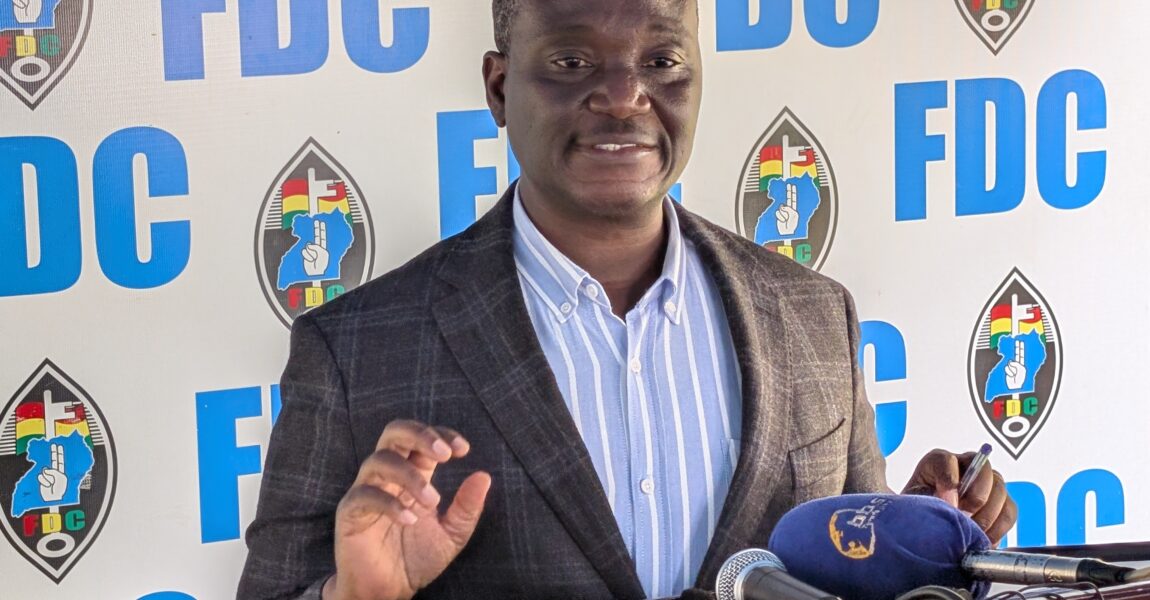
DISCRIMINATORY WETLAND EVICTIONS
We are troubled by the conduct of the National Environment Management Authority (NEMA) in carrying out wetland evictions across Uganda. While we accept that it’s important to protect wetlands, we are concerned with manner in which it’s being carried out.
Factories, and rice farms that belong to the rich sit undisturbed in the same wetlands where ordinary citizens are being chased away. At one time, NEMA’s Executive Director has admitted that some commercial structures were exempted from demolition because they received government approvals. So who issues these approvals?
The poor are being evicted while the rich and powerful are protected.
NEMA should demarcate all protected wetlands with clear boundaries. Those boundaries must be publicly accessible and mapped at local government level so that any person applying for a building permit, buying land, or seeking a business licence can verify the status of that land in advance.
Both the Limitation Act (Cap 80) and The Land Act (Cap 227): Sections 29 and 30 grant bona fide occupants security. That persons who have occupied land for more than 12 years be compensated upon eviction.
However, NEMA has ruled out compensation for evictees, declaring all of them offenders.Furthermore, the Land Fund exists as a mechanism to address situations precisely like this one. We demand that Government deploy Land Fund resources to compensate those being displaced, particularly the most vulnerable.
Our demands
The Forum for Democratic Change calls on Government to:
- Immediately suspend all ongoing evictions until wetland boundaries are fully demarcated, publicly gazetted, and accessible to all citizens.
- Compensate all persons who built or settled in wetlands under approvals issued by NEMA, local governments, or any other government institution.
- Direct NEMA to pursue enforcement equally against all encroachers; commercial, industrial, and residential without distinction based on wealth or political connection.
- Utilize the Land Fund to provide resettlement support for displaced families.
- Respect court orders and due process in all enforcement operations.
THE NEW CABINET; A RESHUFFLE OF A FAILED SYSTEM AND RECYCLED INSTRUMENT OF PERSONAL RULE
Last week on Thursday the Party President made remarks on Mr. Museveni presented to Ugandans as a new cabinet and I want to re-emphasise our position.
First and foremost, this is not a new cabinet that Ugandans expected. It is just a reshuffle. The same Vice President. The same Prime Minister. The same First Lady in the same ministry. It does not constitute any new direction. Ugandans who expected a genuine reset after elections have been handed the same house with some furniture moved around.
What this cabinet reveals, above all else, is an appointing authority that has lost touch with the reality of governing a modern state.
President Museveni initially appointed Justine Kasule Lumumba as Government Chief Whip despite her not being a serving Member of Parliament. The appointment contravened Rule 16(1)(a) of Parliament’s Rules of Procedure, which requires the Government Chief Whip to be appointed from among Members of Parliament representing the ruling party.
Mr. Museveni also appointed of Dr. Lawrence Muganga as State Minister for Internal Affairs is facing a formal legal challenge over allegations that he holds dual Ugandan-Canadian citizenship, in potential violation of Section 19D of the Uganda Citizenship and Immigration Control (Amendment) Act, 2009, which restricts dual citizens from occupying positions including the presidency, prime minister, cabinet ministers, and ministers of state.
Documents circulating online indicate Muganga registered for dual Ugandan-Canadian citizenship. He is also being appointed to oversee the very ministry responsible for immigration and citizenship.
It is also believed that Ambassador Adonia Ayebare, Calvin Echodu, and Sanjay Tanna. Could also be in the same category.
A president who has held power for 40 years should not be making elementary constitutional errors in his cabinet appointments.
In addition, Parliament recently approved a constitutional variation expanding the permissible number of Cabinet ministers from 21 to 30 and Ministers of State from 21 to 51.
This expansion was approved after the government realised it had been operating beyond constitutional limits. In other words, the Constitution was amended to catch up with what the President had already done.
Uganda is a country where teachers go unpaid for months, hospitals lack basic medicines, and millions of citizens have no clean water. This expansion is not in the public interest. It is managing the NRM’s internal political factions at the taxpayer’s expense.
Janet Kataaha Museveni retains her position as Minister of Education and Sports. Even when Uganda’s public education system has not improved under her tenure. School fees remain beyond the reach of millions of families. Teacher pay and welfare are unresolved national problems. The FDC reiterates its call for her removal and replacement with a competent, independent professional.
Vetting of ministers-designate begins today before the Appointments Committee chaired by Speaker Jacob Oboth-Oboth. Ugandans should not expect substantive scrutiny from a committee where the ruling party controls the outcome.
In Conclusion, Ugandans should not expect anything new from this cabinet, it’s the same old story of ‘no change’ untill Ugandans themselves demand real change using means stipulated under the Constitution.
PROTECTION OF UGANDANS IN SOUTH AFRICA
We are concerned by the continued silence of the Government of Uganda on reports of hostility, intimidation, and attacks directed at foreign nationals in South Africa, including Ugandan citizens who live, work, study, and conduct business there.
The Government of Uganda must immediately engage its counterpart in South Africa through diplomatic channels and seek assurances regarding the safety and security of Ugandan citizens. The South African Ambassador to Uganda should be summoned to provide an explanation on the reported incidents and to communicate the measures being taken by the South African authorities to guarantee the safety of foreign nationals.
We further call upon the Ministry of Foreign Affairs and Uganda’s diplomatic mission in South Africa to establish emergency communication channels, maintain an updated register of Ugandan nationals in affected areas, provide consular assistance where necessary, and continuously update the public on developments.
South Africans should remember how we supported them during the time of Apartheid and there are so many South African citizens living and working peacefully in Uganda. Likewise, several South African companies continue to operate profitably within Uganda and benefit from the hospitality of the Ugandan people. It is therefore only fair and reasonable that Ugandan citizens in South Africa receive the same respect, protection, and security.
We strongly condemns any form of xenophobia, discrimination, violence, or incitement against foreign nationals. Such actions undermine African unity, regional integration, and the spirit of Pan-Africanism that both Uganda and South Africa have long championed.
We urge the South African Government to take decisive action against individuals and groups promoting violence and hatred against foreign nationals and to ensure that all those responsible for attacks are held accountable under the law.
One Uganda One People
Centenary Robert Franco
VICE CHAIRPERSON