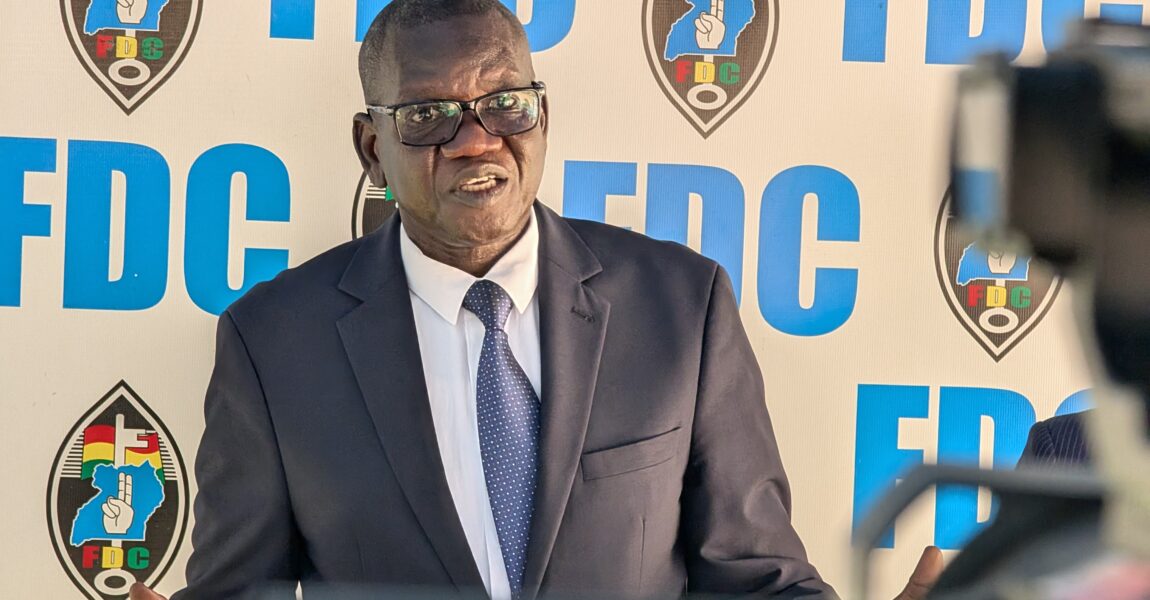
NATIONAL EXECUTIVE COMMITTEE (NEC) MEETING.
Today and tomorrow, the National Executive Committee will be sitting here at the party headquarters.
This will be our first meeting after the General election and the main item on the agenda is the adoption of a one-year strategic plan to guide the party’s direction for the period ahead.
NEC will also exercise the authority delegated to it by the National Council to fill vacant positions in the party leadership.
The following positions are on the table for new appointments:
- Chairperson, Northern Uganda is vacant following the defection of Hon. James Otto Apili to the NRM.
- Secretary for Works fell vacant following the defection of Eng. Payi to PFF.
- Deputy Secretary for Works
- Deputy Secretary General fell vacant following the defection of Mr. John Socrates Mugabi to NUP.
- Deputy President to replace Hon. Yusuf Nsibambi who crossed to NRM
RISING FUEL COST
Fuel prices across the country have escalated in recent weeks, believed to be caused by the conflict between the USA, Israel, and Iran. Some fuel stations have increased prices by nearly 150%.
This is not the first crisis we are facing as a country. Our Government has had more than 40 years to prepare for any fuel prices crisis but has chosen not to.
Whereas Uganda may not be able to control these international price escalations, but any functioning government maintains fuel reserves enough to sustain the country for at least six months without price increases, even as global prices rise.
When the NRM came to power in 1986, fuel reserves existed in this country. They dismantled them and sold some of them to Private investors.
For the last 20 years, we have advised then to revive these reserves and possibly have more put in place but they have ignored us.
This is the right time for the NRM government to listen to our call and have reserves put in place.
We call upon Government to implement emergency tax waivers on fuel and fuel-dependent products with immediate effect to stabilize the prices.
EBOLA VIRUS OUTBREAK
On May 17, 2026, the World Health Organization (WHO) declared the Ebola virus disease outbreak caused by Bundibugyo virus in the DRC and Uganda. WHO thereafter declared Public Health Emergency of International Concern for both Uganda and DRC. We categorically want to commend our health workers who are already on the front line to manage this crisis.
However, while we believe that the protection of lives is a priority, Government must avoid panic-driven decisions that end up adversely affecting ordinary citizens more than the disease itself would do. We have seen the cancellation of Martyr’s Day national celebrations (for the first time ever), restrictions on gatherings, the lockdown of some parts of the country such as the greater Mubende area and closure of businesses.
We have also learnt that Government has decided to close all borders with DRC
Ebola has existed in Uganda since 2000 so this is not the first outbreak, but every outbreak should strengthen our preparedness instead of becoming an excuse for excessive restrictions and misuse of state funds. We want to caution Government against repeating the mistakes made during the COVID-19 lockdowns which left many Ugandans economically shattered and struggling to recover even up to today.
It would therefore be irresponsible to impose harsh restrictions again without considering how citizens will survive. Government should prioritize measures that stop the spread of the disease while allowing Ugandans to continue earning a living wherever possible.
The FDC also warns against corruption and abuse of public funds during this crisis. Ugandans remember how large sums of money meant for COVID-19 response disappeared through inflated procurements and mismanagement. Finally, the WHO has issued Guidelines on how to prevent the spread of this virus and we call upon all Ugandans to follow these guidelines.
The FDC wishes to commit to the dissemination of these guidelines across the country.
UGANDA’S EDUCATION SYSTEM
Monday May 25th, 2026 marked the start of the second term for primary and secondary school for major schools across the country. Though the majority of schools started the term last week on Monday May 18th 2026.
However, we have received various complaints from parents and students/pupils over the current Education System which we want to address. The current system is characterised by Short School terms and Very short Holidays.
Parents are constantly under pressure to raise school fees within very short windows of time while students don’t have enough Holiday time to spend with parents and guardians at home. In fact, children spend the majority of the year confined within school walls, and return home for only one to two weeks.
In short, save for third term holidays, they live at school and only come home to visit for a week or two and go back. Children are growing up without time for any informal education. To make it worse, some schools retain candidate classes at school during holidays for “coaching” and so, some end up not coming home at all.
In addition, the current Education system is producing examination candidates, young people who have spent years in classrooms but who are disconnected from family, from community, and from reality. This is also affecting the quality of the labour force the country has.
Our proposal
We propose the restructuring of Uganda’s school calendar to a two-term system, in which children spend at least four (4) months at school and two (2) months at home.
This will first of all reduce the frequency of school fees demands, hence easing the financial burden on parents. It will create time between children and their families, so the children get the informal life skills that no classroom can provide. It would give children adequate time to rest, develop holistically, and grow into well-rounded human beings rather than examination machines.
Article 26 of the Universal Declaration of Human Rights (UDHR) in 1948 difines education as a fundamental human right and thereforn it’s the duty of govermants to make education available and affordable. Most schools the days ar very costly making it difficult for ordinarly Ugandans to afford it
One Uganda One People
Patrick Oboi Amuriat
FDC PRESIDENT
Kampala May 28, 2026